

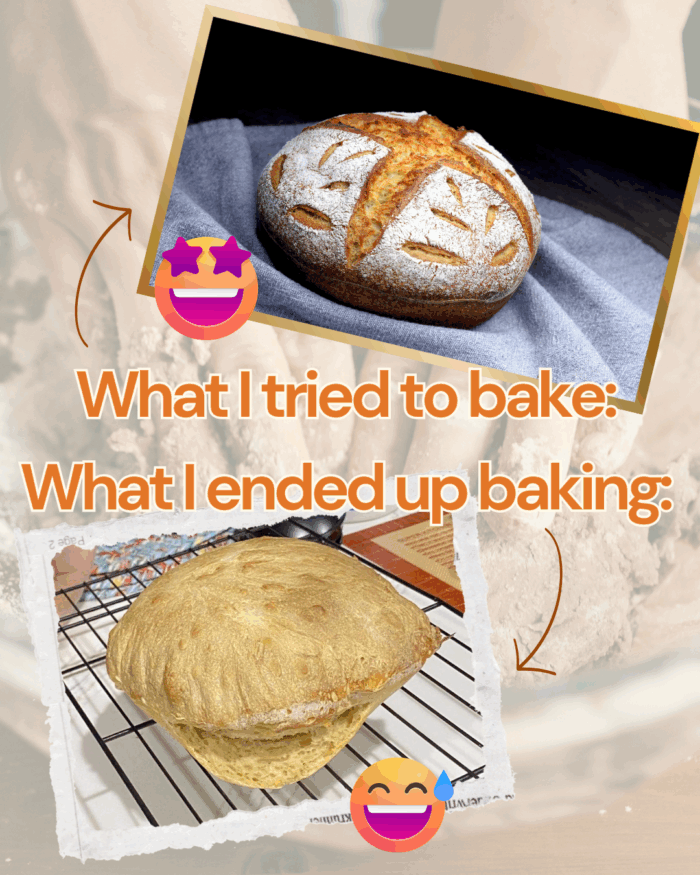
These days, it seems like everyone is making sourdough bread.
The pandemic jump-started a sourdough boom — with a recent resurgence in 2024 — but it took me a good five years before I took the plunge myself.
Since receiving a starter last month, I’ve baked sourdough bread three times. At first, I felt confident I could bake something pretty and tasty. After all, I was a seasoned home baker with her own baking blog.
But in reality? My first sourdough loaf was devastatingly ugly, bulging at the bottom and gummy and uneven on the inside. My husband and I laughed at how silly it looked (though we still ate it afterward — toasted, I should add).
It was then I realized: Sourdough is way harder than I thought it’d be. Although I’d followed all instructions to a T, my loaf turned out looking nothing like the pictures in the recipe.
And I’m not alone. There’s a reason so many of the top Google searches for “sourdough” are phrased as questions.
Here’s what I wish I knew before I tossed that first sourdough loaf in the oven.
1. Sourdough Starters Take Time to Strengthen
When I received an established starter from an acquaintance, I assumed it was hearty and ready to go.
I didn’t know it would take time to build up its strength through regular feedings or that putting it in my fridge would significantly slow its progress.
I also didn’t pay attention to how long it took for my starter to double in size and assumed it was good enough when I began prepping my first sourdough loaf (spoiler alert: It wasn’t).
The more regularly I fed my starter after my first sourdough loaf — and once I took it out of the fridge and began feeding it daily on my countertop at room temperature — the stronger, bubblier, and more visibly active it became.
2. Your Kitchen’s Temperature Really Matters
I live in the Pacific Northwest, so even in the summer my kitchen can get chilly if our windows are open and it’s a cloudy, breezy day.
When baking my first sourdough loaf, I had no idea just how cold my kitchen was — and how much this had impacted my dough’s bulk fermentation and proofing times.
It’s totally fine to make sourdough in a cooler kitchen, but just know your dough will take longer to bulk-ferment. I vastly underestimated this and popped my loaf in the oven sooner than I should have.
3. Even Beginner Recipes Aren’t Always Easy
I scoured the internet for easy-to-follow beginner sourdough recipes, and the one I found was relatively straightforward. “I can make this, no problem,” I remember thinking.
But I had no idea how many factors can affect how your first sourdough loaf turns out, from kitchen temperature (see above), to type of flour, to hydration ratios. Don’t feel like a failure if your “easy recipe” isn’t as easy as you thought it’d be.
4. Overly Sticky Dough Could Mean Larger Issues
Every video I watched and every recipe I read made no mention of just how sticky your dough can get, especially in the beginning when you’re mixing ingredients and performing stretch-and-folds.
Mine was far stickier than it should’ve been — most likely I used too much water and didn’t knead enough — but I wish I knew then how much “sticky” is considered normal and how much is cause for concern. It could’ve saved me a whole lot of frustrated hand-washing.
5. Don’t Be Afraid to Knead
Having baked tons of cakes and knowing how important it is to not overmix the batter, I was hesitant to knead my sourdough at first, thinking if I touched it too much it would cause my loaf to deflate or bake unevenly.
But ever since I started kneading more and reading advice online about how important it is to move your dough in order to strengthen it, my sourdough-making process has gone a lot smoother.
6. Sourdough Videos Are Your Friend
I love watching baking reels on Instagram, but I should’ve watched more that showed the entire process before attempting my first sourdough loaf.
I’m a visual learner, so sometimes written recipes don’t give me a full-enough picture of how things should look and feel, both of which are super important when making sourdough bread.
7. You’re Not Alone if You “Fail”
Nobody’s first sourdough loaf turns out perfect.
If you’re just starting your sourdough journey as I am, know this: You’re not alone if you find it hard. Sourdough isn’t easy! In fact, it’s one of the most challenging foods I’ve baked (so far).
Read stories online; you’ll see just how common it is for folks to spend months, even years, perfecting their sourdough loaves and learning how to account for factors like hydration, starter strength, and temperature.
And if you ever need a pick-me-up, watch reels of people’s first sourdough loaves. I guarantee you’ll smile when you realize just how common it is to “fail.”

Hannah is a passionate amateur baker, a prolific writer and editor, and the founder of Kneady Livin’. She is committed to providing fellow home bakers with tips, product recs, and helpful how-to guides. Her favorite baked goods to make include cakes, cupcakes, sourdough bread, cookies, and muffins. She hopes to open up her own cottage bakery in the near future.