

You can’t go wrong with a perfectly portioned treat.
Two of my favorite single-serving snacks are muffins and cupcakes. The popular baked goods might look alike, but their textures and flavors differ wildly, despite containing many of the same ingredients.
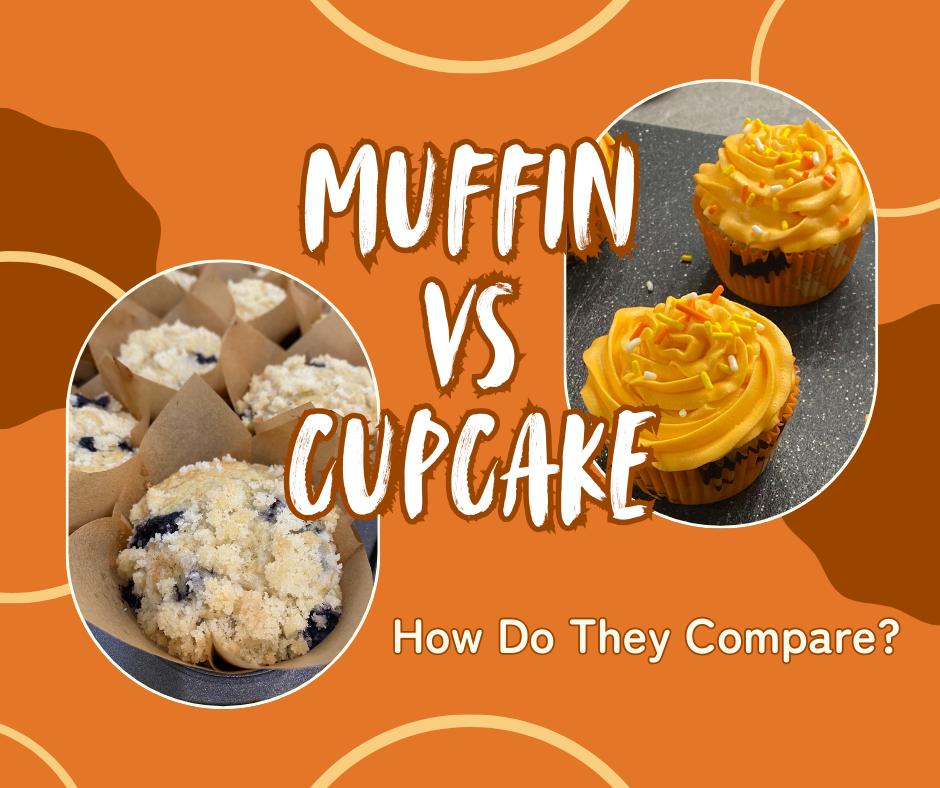
So what’s the main difference between muffins and cupcakes? Muffins are individual quick breads that can be sweet or savory, whereas cupcakes are tiny cakes with frosting.
Let’s dive into the muffin vs. cupcake debate so you can learn how the two compare as well as the pros and cons of baking them.
Muffin vs. Cupcake Overview
The following table provides a brief summary of the key differences between muffins and cupcakes:
| Muffin | Cupcake | |
|---|---|---|
| Appearance | Dome-like and slightly larger | Flat on top and slightly smaller |
| Texture | Dense, heavy, bread-like | Fluffy, light, cake-like |
| Taste | Less sweet (can be savory); considered breakfast or hearty snack | Very sweet; considered dessert |
| Topping | No frosting but may have glaze, crumble, or streusel | Very sweet frosting, such as buttercream or ganache |
| Ingredients | Less sugar and fat; typically uses melted butter or oil and fewer eggs | More sugar and fat; typically uses softened (not melted) butter and more eggs |
| Mix-Ins | Usually contains mix-ins such as berries, nuts, and seeds | Does not usually contain mix-ins |
| Batter | Thick, lumpy | Airy, smooth |
| Mixing Method | Mix wet and dry ingredients separately, then combine | Cream butter and sugar, then add wet and dry ingredients |
| Oven Temperature | Typically higher, 375-400° F | Typically lower, 350° F |
6 Major Differences Between Muffins and Cupcakes
1. Frosting
Arguably the easiest way to distinguish a muffin vs. cupcake is whether or not the treat comes with a large dollop of frosting on top.
Cupcakes, like cakes, almost always have frosting; this can be buttercream, ganache, cream cheese frosting, or something similar.
In comparison, muffins do not typically have frosting, though they may have a simple glaze or crumble on top for additional sweetness.
“We often just use cinnamon sugar or turbo sugar as muffin garnish, whereas with cupcakes we are adding frosting,” says Leslie Mackie, founder and owner of the Seattle-based bakery chain Macrina Bakery.

2. Texture
Texture is another simple way to distinguish muffins from cupcakes.
“The texture of muffins is heavier and more dense, with fruit, nut, [and other] inclusions,” explains Mackie.
In contrast, cupcakes are richer, airier, and more cake-like.
Even before going in the oven, muffin batter tends to be thicker and lumpier than cupcake batter, which is lighter, fluffier, and more uniform throughout.
3. Fat and Sugar Ratio
Cupcakes contain a lot more sugar and fat than muffins — often twice the amount a muffin recipe calls for. This additional sugar and fat makes cupcakes fluffier and, of course, sweeter.
Similarly, many cupcake recipes use more eggs and less liquid than muffin recipes. All of these small changes contribute to the major differences in texture described above.
4. Mixing Method
Although cupcakes and muffins use many of the same ingredients, they require different mixing methods. Muffins use the “muffin method,” while cupcakes use the “creaming method.”
Here’s how the two methods work:
- Muffin Method: Mix dry and wet ingredients in separate bowls before mixing together. Avoid overmixing. The batter should be somewhat thick and a little lumpy.
- Creaming Method: Cream together butter and sugar before adding wet and dry ingredients. Mix well. The batter should be airy and smooth.
Many find the creaming method trickier, suggesting that muffins might be easier to make.
“For us at Macrina, muffins are very easy [to make], with butters melted and ingredients sifted and mixed together,” says Mackie. “Key is to just mix together and even leave some veins of flour as they will absorb in the baking process.”
5. Sweetness
Muffins can be either sweet or savory — though they’re typically sweet, with mix-ins like fruits and nuts — while cupcakes are always sweet due to their high sugar content and frosting.
Examples of savory muffins include bran muffins and corn muffins.
But even sweet muffins, such as blueberry and chocolate chip, will still taste less sweet than cupcakes with similar flavors.
6. Purpose
Muffins are usually eaten for breakfast or as a hearty, somewhat sweet, on-the-go snack.
In contrast, cupcakes are always considered dessert. You eat them in the same way you might grab an ice cream cone after lunch or chow down on some cookies after dinner.
“I think the cupcake craze has faded, although individual desserts seem to still be very popular, which a cupcake would align with,” notes Mackie.
And because cupcakes are just mini cakes, they’re often baked for special occasions, like birthdays, weddings, and graduation parties.
Muffin vs. Cupcake Similarities
We’ve gone over the major differences between muffins and cupcakes. But what about the similarities?
Both muffins and cupcakes:
- Are baked in a cupcake/muffin pan (they’re the same thing!)
- Use paper liners (cupcakes always use liners, while muffins may or may not use them)
- Can include mix-ins like fruits and nuts
- Contain the same base ingredients: flour, sugar, egg, fat, and liquid
- Are single-serving treats
- Can be eaten as a dessert
- Can be sold individually or in a batch (usually 6-12)
Pros and Cons of Baking Muffins vs. Cupcakes
I love baking both muffins and cupcakes — but for very different reasons.
Here are what I consider to be the biggest pros and cons of preparing the two baked goods.
Muffins

Pros
-
Versatile flavors — great for breakfast, snack, or dessert
-
Easy to mix
-
Quick to make, especially if you don’t add a topping (like a glaze or crumble)
-
Easy to transport
Cons
-
Not as sweet, so may not satisfy that dessert craving
-
Less “pretty” and less customizable
-
Can lose that tasty crust on top quickly, changing its texture
Cupcakes

Pros
-
Simpler alternative to multi-layered cakes
-
Fun to decorate (and great for practicing your piping)
-
Popular, easy-to-make treat for celebrations and parties
-
More customizable in terms of color and decoration
Cons
-
Mixing can take longer due to needing to cream butter and sugar
-
Less healthy due to higher sugar and fat content
-
More time-consuming to make since you’ll need to prep frosting

Hannah is a passionate amateur baker, a prolific writer and editor, and the founder of Kneady Livin’. She is committed to providing fellow home bakers with tips, product recs, and helpful how-to guides. Her favorite baked goods to make include cakes, cupcakes, sourdough bread, cookies, and muffins. She hopes to open up her own cottage bakery in the near future.